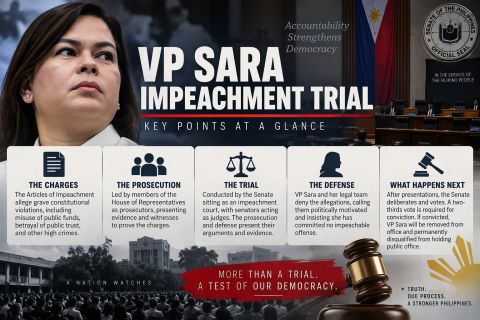
VP Sara Duterte Impeachment Trial Summary ( Day 1 to 39) -- A Day-by-Day Chronicle of Political and Financial Scrutiny
An exhaustive 39-day account documenting the constitutional debates, financial disclosures, witness testimonies, and pivotal legal turns shaping the case against the Vice President.
The Senate Impeachment Court trial of Vice President Sara Duterte marks one of the most momentous legal and political showdowns in modern Philippine history. Facing four primary Articles of Impeachment—ranging from the alleged misuse of millions in confidential funds to financial non-disclosure and public grave threats—the proceedings have featured intense constitutional debates, high-stakes evidence presentations, and sharp clashes between the prosecution and defense teams. Below is a day-by-day synopsis of the first ten days of the impeachment trial, detailing the key highlights and core takeaways from each day.
Day 1: Convening the Court and Procedural Battles The impeachment trial commenced with the formal organization of the Senate Impeachment Court, where Senator Francis Escudero was elected Presiding Officer following spirited floor debates among senator-judges. The prosecution opened by establishing the moral and legal imperative of holding public officials accountable to the Constitution, while the defense maintained Vice President Duterte’s innocence and emphasized strict adherence to due process. The key takeaway from Day 1 was the setting of vital procedural parameters, notably the decision on voting thresholds and rules governing the admissibility of initial exhibits.
Day 2: Admission of Electronic Evidence and Threat Video Debates The prosecution presented digital recordings containing Vice President Duterte's controversial public remarks, alongside technical testimony from National Bureau of Investigation (NBI) agents to verify that the media was authentic and not AI-generated. The defense mounted strong objections against admitting secondary and photocopied documentation, raising strict evidentiary standards regarding original digital files. The primary highlight was the court’s decision to formally admit the core threat video into evidence, marking the prosecution’s first major procedural victory.
Day 3: Confidential Fund Subpoenas and Witness Issuances
Focus shifted heavily toward Article I of the impeachment complaint, detailing the alleged misuse of confidential funds across the Office of the Vice President (OVP) and the Department of Education (DepEd). The Impeachment Court approved key prosecution motions to issue subpoenas for high-ranking OVP officials and crucial liquidation documents. The key takeaway of the day was the court’s willingness to allow deep judicial scrutiny into spending records despite defense efforts to restrict access to classified financial operations.
Day 4: Testimonies on OVP Operations and Staff Subpoenas
The prosecution called internal administrative witnesses to map out the logistical chain of command behind the disbursement of specialized agency budgets. Defense attorneys subjected state witnesses to intense cross-examination, asserting that routine administrative duties do not equate to direct criminal liability or impeachable offenses by the Vice President. The day's major highlight was the court's confirmation that key top aides, including the OVP Chief of Staff, would be mandated to appear and testify.
Day 5: Debates Over Bank and Tax Record Subpoenas
The proceedings turned to Article II regarding alleged unexplained wealth and discrepancies in Statements of Assets, Liabilities, and Net Worth (SALN). The prosecution panel petitioned the court to compel the production of official tax filings and joint bank account records belonging to the Vice President and her spouse. The defense strongly countered that forcing such disclosures violated bank secrecy laws and constituted an impermissible "fishing expedition," leading senator-judges to hold an extended executive caucus.
Day 6: Key Staff Testimony and Context on Public Statements
OVP Chief of Staff Zuleika Lopez took the witness stand under intense public scrutiny. The defense argued that any fiery public statements made by the Vice President were made under severe emotional distress and political persecution triggered by administrative detentions. The day highlighted the distinct clash between the prosecution’s strict textual reading of threat allegations and the defense’s contextual, political defense.
Day 7: The Ruling on Financial Record Disclosures
Following days of deliberation, the Impeachment Court issued a major ruling granting prosecutors conditional authority to introduce select financial and tax records. Prosecutors argued that public transparency takes precedence in constitutional trials, while the defense signaled its intent to appeal or challenge the scope of financial inquiries. The key takeaway was a significant legal shift in favor of broader financial scrutiny, clearing the path for financial regulatory agencies to testify.
Day 8: Presentation of Bureau of Internal Revenue (BIR) Documents
Officials from the Bureau of Internal Revenue (BIR) appeared before the court to provide testimony on the declared business earnings and tax filings of the Vice President. Cross-examination by defense attorneys revealed that certain tax classifications were based on standard administrative assumptions regarding private law practice rather than direct audit findings. The key highlight of Day 8 was the defense demonstrating potential gaps in official tax assessments, cautioning against premature conclusions regarding tax evasion or undeclared income.
Day 9: Financial Audits and SALN Discrepancy Claims
Private prosecutors presented comparative financial summaries analyzing the Vice President’s net worth reported in her SALNs against verified bank holdings. The defense rigorously disputed the accounting methods used by prosecution experts, contending that valid liabilities, joint holdings, and standard asset valuations explained any superficial discrepancies. The central takeaway was the battle of financial experts, establishing that the verdict on unexplained wealth would hinge on technical accounting rules.
Day 10: Trimming of Articles and Prosecution Restructuring
Marking a major tactical shift, the prosecution panel formally notified the court that it was dropping secondary charges, including specific bribery and threat sub-articles, to streamline the trial focus onto core financial irregularities and misuse of public funds. The defense welcomed the move as evidence that the initial articles contained inflated allegations, while prosecutors maintained that their remaining evidence was more than sufficient to secure a conviction. Day 10 ended with a restructured, sharper legal battlefield focused strictly on asset tracking and financial accountability.
Day 11: Introduction of Supplementary OVP Expenditure Logs
The prosecution introduced comprehensive tracking logs and audit summaries regarding unauthorized transfers within the Office of the Vice President's discretionary accounts. The defense immediately challenged the authenticity of photocopied transmission receipts, forcing the court to rule on the strict admissibility standards for secondary electronic documents. The main takeaway was the court's insistence on verifying digital chains of custody before accepting financial ledgers as formal exhibits.
Day 12: Testimonies of Commission on Audit (COA) Officials
High-ranking audit officials from the Commission on Audit (COA) took the witness stand to shed light on flagged disbursements and unliquidated confidential funds from the previous fiscal cycle. Cross-examination by the defense emphasized that normal administrative back-and-forth processes often involve routine audit observations rather than outright corruption. The highlight of the day was the detailed technical breakdown of how special-purpose funds were requested, approved, and eventually questioned by state auditors.
Day 13: Scrutiny Over Liquidation Slips and Acknowledgement Receipts
The focus remained heavily on the specific signatures and acknowledgement receipts tied to the controversial confidential fund allocations. Prosecutors presented comparative handwriting analyses pointing to alleged discrepancies, while defense counsels questioned the qualification of the prosecution's handwriting expert. The key takeaway was a sharp disagreement over whether minor administrative irregularities in documentation constituted a culpable violation of the Constitution.
Day 14: Debates on Subpoenaing Executive Department Insiders
The Impeachment Court heard intense legal arguments concerning whether current and former officials from the Department of Education could be compelled to testify regarding policy directives during Vice President Duterte’s tenure as cabinet secretary. The defense argued that summoning department insiders violated executive privilege and administrative hierarchy, but the prosecution countered that public accountability overrides internal department rules. The court ultimately allowed limited subpoenas for select sub-cabinet officials.
Day 15: Cross-Examination of State Auditors on Procedural Nuances
Defense lawyers methodically cross-examined COA auditing specialists, pointing out historical precedents where agency heads were given ample time to cure audit findings without facing criminal or administrative charges. Prosecutors countered that the scale and speed of the multi-million-peso disbursements under the OVP lacked any precedent. The highlight was the defense successfully establishing that standard auditing remedies include compliance windows that were allegedly cut short by political pressure.

So here’s something you don’t hear every day: a Chinese Navy warship accidentally saving a Philippine Coast Guard vessel—by crashing into its own coast guard ship. It happened near Scarborough Shoal, just 10.5 nautica...
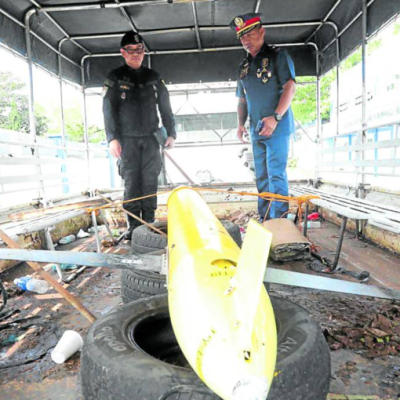
The Philippine Navy is currently delving into the origins and purpose of an underwater drone adorned with Chinese characters, which was found off the coast of San Pascual in Masbate province. This intriguing device, d...

In what was supposed to be a joyous reunion turned into a tragic loss, the Nacalaban family is mourning the death of their beloved sister, Dafnie Nacalaban, an Overseas Filipino Worker (OFW) in Kuwait. Dafnie Nacalaba...

A bao-bao driver is now in custody at the Tagum City Police Station after threatening a tricycle driver with a pistol in front of a major mall in the city on the evening of December 18, 2024. According to a report fro...